Product data · Clear APET sheet roll
Clear APET sheet roll — supply range and technical data
The numbers a converter needs before ordering a trial roll: gauge to grammage conversion, slit and roll parameters, material choice, surface options, packing and how tolerances are verified. This page expands the summary on the home page; every figure below is indicative and the written specification and PI govern the order.
Supply range at a glance Indicative
Defaults we quote against. Anything outside these ranges is quoted case by case, not assumed.
- Gauge
- 0.25–0.50 mm
- Gauge tolerance
- ± 0.01 mm
- Slit width
- 400–800 mm
- Core ID
- 3" or 6"
- Density basis
- APET 1.34 g/cm³
- Minimum
- 500 kg / spec
- Mixed gauges
- Yes, one pallet
- Surface
- Gloss / matte / treated
- Protective film
- One or two sides, on request
- Grade
- Industrial, non-food-contact
Gauge to grammage, area and roll weight
Calculated at APET density 1.34 g/cm³ and a 610 mm × 500 m roll — the size most often asked about. Use it to compare a per-kg quote with a per-metre quote on the same basis.
| Gauge | Nominal gsm | m² per tonne | kg per roll, 610 mm × 500 m |
|---|---|---|---|
| 0.25 mm | 335 g/m² | 2,985 m² | 102.2 kg |
| 0.30 mm | 402 g/m² | 2,488 m² | 122.6 kg |
| 0.35 mm | 469 g/m² | 2,132 m² | 143.0 kg |
| 0.40 mm | 536 g/m² | 1,866 m² | 163.5 kg |
| 0.45 mm | 603 g/m² | 1,658 m² | 183.9 kg |
| 0.50 mm | 670 g/m² | 1,493 m² | 204.3 kg |
gsm = gauge (µm) × 1.34 · m²/t = 1,000,000 ÷ gsm · kg/roll = width (m) × length (m) × gsm ÷ 1000. Density bases used elsewhere in the trade differ by around 3% — at 0.30 mm that is 402 versus about 414 g/m² — which is why we fix the basis in writing. Indicative values only; other widths and lengths are calculated for your exact size on request.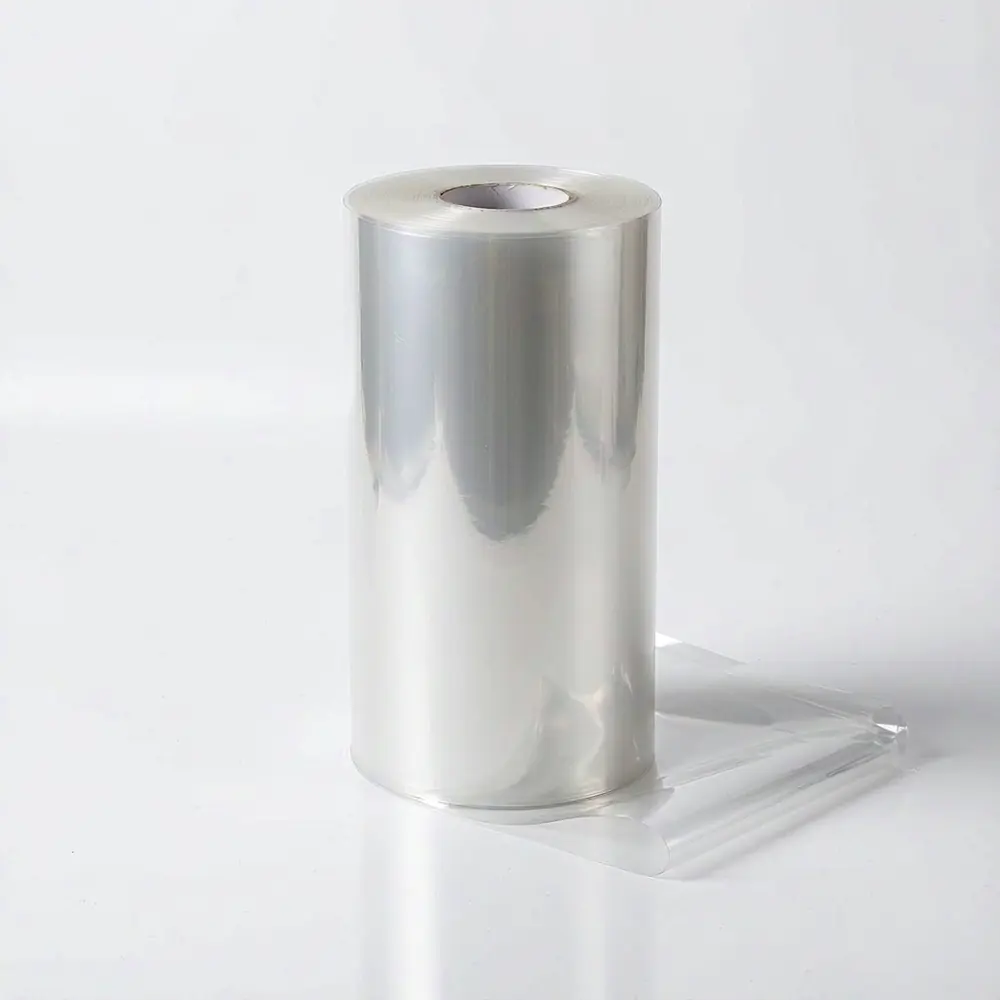
Choosing the material
Typical trade characteristics, not a grade certificate. Availability, recycled content and ESD target range are confirmed per enquiry.
| Material | Where it is typically used | What to check before a trial |
|---|---|---|
| APET | Clear trays, blisters, clamshells, folding boxes and box windows | Clarity, haze, drying before forming, trim behaviour on your line |
| RPET | Industrial inserts and packaging where recycled content is specified | Recycled-content percentage, consistency of gauge and optical properties, document set |
| ESD APET | Electronics component trays and inserts | Surface-resistance target range and its stability; confirm the test method in writing |
| PETG / GAG | Deep-draw parts, printed overlays, where higher toughness or a sealable layer is needed | GAG layer structure, forming window and sealing behaviour — quoted case by case |
| PP | Industrial inserts and parts needing higher heat or chemical resistance | Forming window differs markedly from APET; run a trial roll before committing |
Slitting, winding and cores
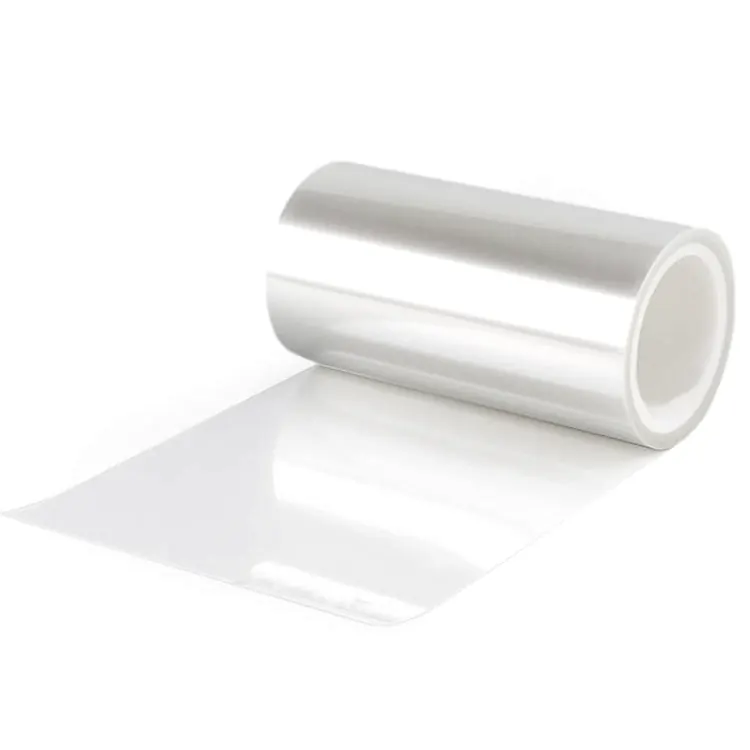
- Slit width — 400 to 800 mm, cut to your line web width. State the width tolerance you need; do not assume a catalogue value.
- Core — 3" or 6" paper core to match the unwind stand. Core ID and maximum roll diameter are written into the specification.
- Roll build — winding tension, roll weight and roll OD are set so the roll runs on your machine without telescoping. Very heavy rolls may be limited by the mill's jumbo width and the pallet.
- Edge and ends — slit edge and roll-end condition are checked at packing; photos of roll ends and shipping marks can be supplied before dispatch.
- Splices — if your process cannot accept a splice in a roll, say so at enquiry stage so it is written into the specification rather than discovered on the line.
Surface and protective film options
Options are grade- and mill-dependent; we confirm what is actually available for your specification rather than listing everything as standard.
Finish
Gloss or matte, one- or two-side. Anti-scratch, anti-fog and anti-block treatments are quoted case by case.
Print preparation
Corona treatment on request for UV / screen printing. Confirm adhesion on your own ink system before a production order.
Protective film
PE protective film one or two sides. State which side must stay clean through forming, printing or die-cutting.
Packing and export shipment
| Item | Standard practice |
|---|---|
| Roll wrap | PE wrap, then kraft or protective layer, roll ends protected |
| Unit load | Rolls on an export pallet, strapped and stretch-wrapped |
| Pallet | Heat-treated / IPPC-marked pallet where the destination requires it; confirm with your broker |
| Label | Specification label with grade, gauge, width, roll / batch number and net weight |
| Marks | Shipping marks as stated in the PI; packing photos supplied before dispatch |
| Loading | Loading plan, roll count and gross / net weights issued per order — we do not publish a fixed container quantity |

Tolerance, sampling and the documents behind the numbers
- Gauge tolerance is stated as ± 0.01 mm by default; the agreed sampling method and the number of measurement points are written into the specification, not decided after a dispute.
- Acceptance is determined solely against the written specification and the sampling method both sides signed. A buyer's own test report, a downstream customer's finding or an end-use performance result does not replace that method.
- Where the mill's underlying documentation supports it, we pass through the batch test report, material declaration, REACH SVHC and RoHS statements, SDS and the origin certificate applicable to your market — as received, without independent verification of their contents.
- We do not hold or claim ISO, food-contact or product certifications, and we do not issue a declaration of compliance. Ask for the exact document list with your enquiry.