Application note · For converters
Thermoforming with APET sheet — a converter's guide
A practical checklist for running clear APET on a vacuum-forming or thermoforming line: drying, the heating and forming window, common defects and how APET compares with RPET, PP and PVC. Written for industrial, non-food-contact work; every number is indicative and your own trial governs.
Scope and limits of this guide
We supply the sheet; the converter forms, prints, folds or die-cuts it. The notes below apply to clear APET and RPET sheet in roll form used for industrial parts trays, blisters, clamshells, folding boxes, inserts and display components. They do not apply to food-contact, medical, pharmaceutical or child-use applications, which are outside the grades we handle.
Drying before forming
APET is hygroscopic. Moisture picked up in storage shows up as bubbles, haze or a loss of clarity when the sheet is heated. Typical practice is dehumidified drying in the 60–70 °C range for roughly 4–6 hours, but the correct time and temperature depend on gauge, storage history and the mill's formulation — take the mill data sheet as the authority, not this page.
- Over-drying or excessive temperature can promote crystallisation, whitening or blocking of wound layers.
- Keep rolls wrapped until use; a partly used roll should be re-wrapped and its exposure time recorded.
- If a roll has been stored in a humid warehouse, extend the drying cycle and check a sample part before committing the full roll.
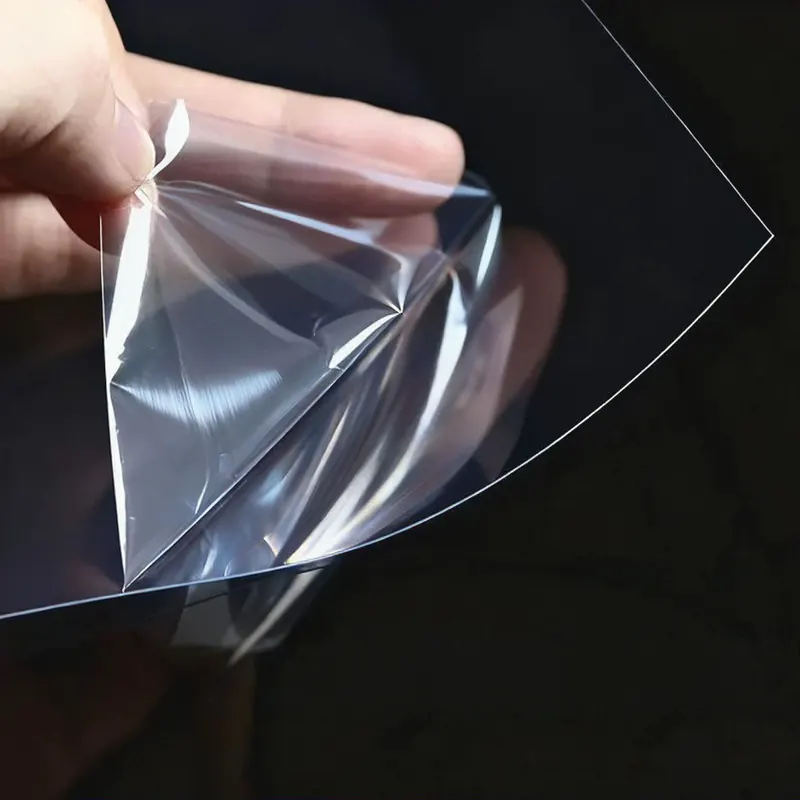
Heating and the forming window
Indicative only. Sheet surface temperature, not heater setpoint, is the useful number.
| Parameter | Typical starting range | What to watch |
|---|---|---|
| Sheet surface temperature | roughly 110–160 °C depending on gauge and grade | Measure at the sheet, not at the heater; heavier gauges need longer and more even heating |
| Mould temperature | roughly 40–60 °C | Too cold gives poor detail definition; too warm slows the cycle |
| Heating method | Two-side heating for thicker sheet | Uneven heating shows up as sag on one side and local thinning |
| Sag control | Reduce soak time or support the web | Excessive sag causes webbing and variable wall thickness |
Defect → likely cause → first check
A starting point for troubleshooting, not a substitute for your own process records.
| Symptom | Likely causes | Check first |
|---|---|---|
| Whitening or haze | Crystallisation from overheating or over-drying; excessive regrind | Actual sheet temperature, drying time and temperature |
| Bubbles or micro-voids | Moisture in the sheet | Storage history, roll wrapping, drying cycle |
| Sag / webbing | Overheating, long soak, insufficient web support | Soak time, two-side heat balance, sag before forming |
| Poor detail definition | Sheet too cool, mould too cold, low vacuum or slow draw | Sheet temperature at the tool, vacuum level and timing |
| Sticking to the mould | Sheet too hot, mould too warm, insufficient release | Mould temperature and cycle timing |
| Brittle or feathered trim | Over-dried or over-heated sheet, incorrect tool clearance | Drying record and trim tool condition |
| Variable wall thickness | Uneven heating or inconsistent gauge | Heater zoning and the batch gauge report against the written tolerance |
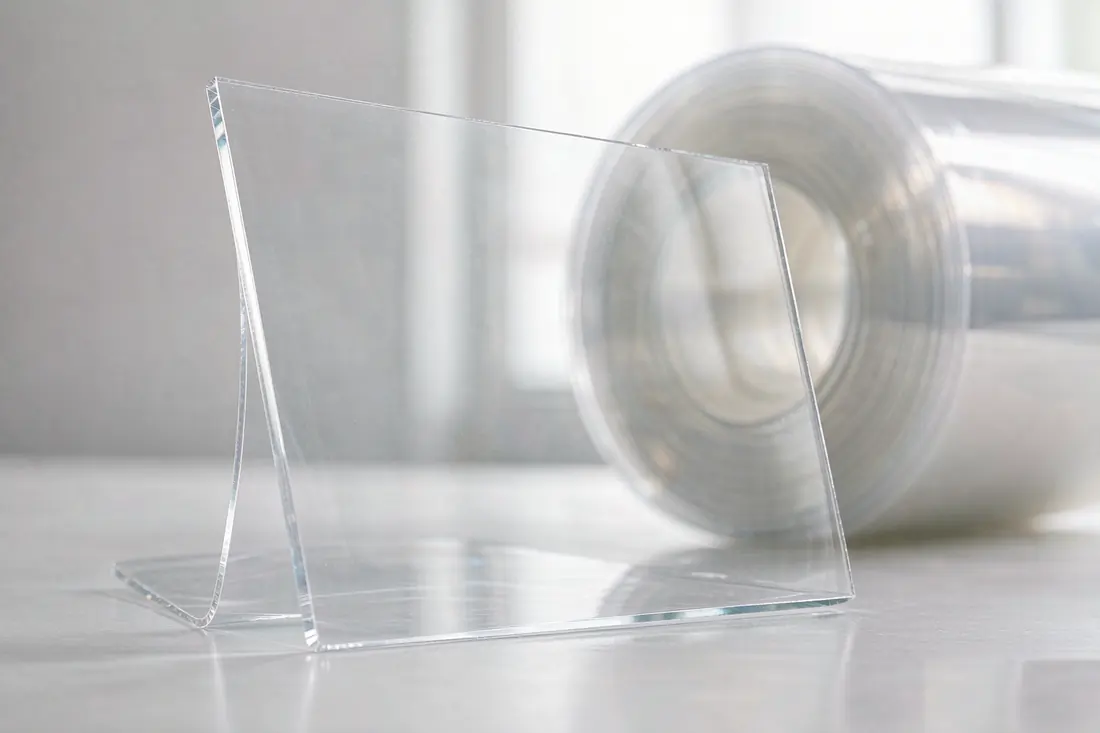
Choosing the sheet for the part
APET
Best all-round clarity and stiffness for clear trays, blisters and windows. Needs drying; the most forgiving forming window of the PET family.
RPET
Where recycled content is specified. Expect more variation in optical properties between batches — qualify with a trial roll and fix the document set in writing.
PP
Higher heat and chemical resistance, but a markedly different forming window and lower clarity. Do not substitute into an APET tool setting without a trial.
PVC
Still used in some industrial forming, but increasingly restricted by buyer and regulatory requirements. We do not quote it as a default grade.

Running a trial roll
- Send the six RFQ items: material and grade, gauge and size, surface and film, process and end use, quantity and destination, and the documents you need.
- We return an itemised PI and confirm a trial slit roll in your gauge and width, with size, freight and timing in writing.
- Record drying time and temperature, sheet surface temperature, mould temperature, cycle and vacuum settings for every acceptable part.
- Lock those settings into your internal process sheet, then place the production order against the same written specification.
- Keep the affected rolls and original packing until any review is complete; claims follow the window and sampling method stated in the PI.